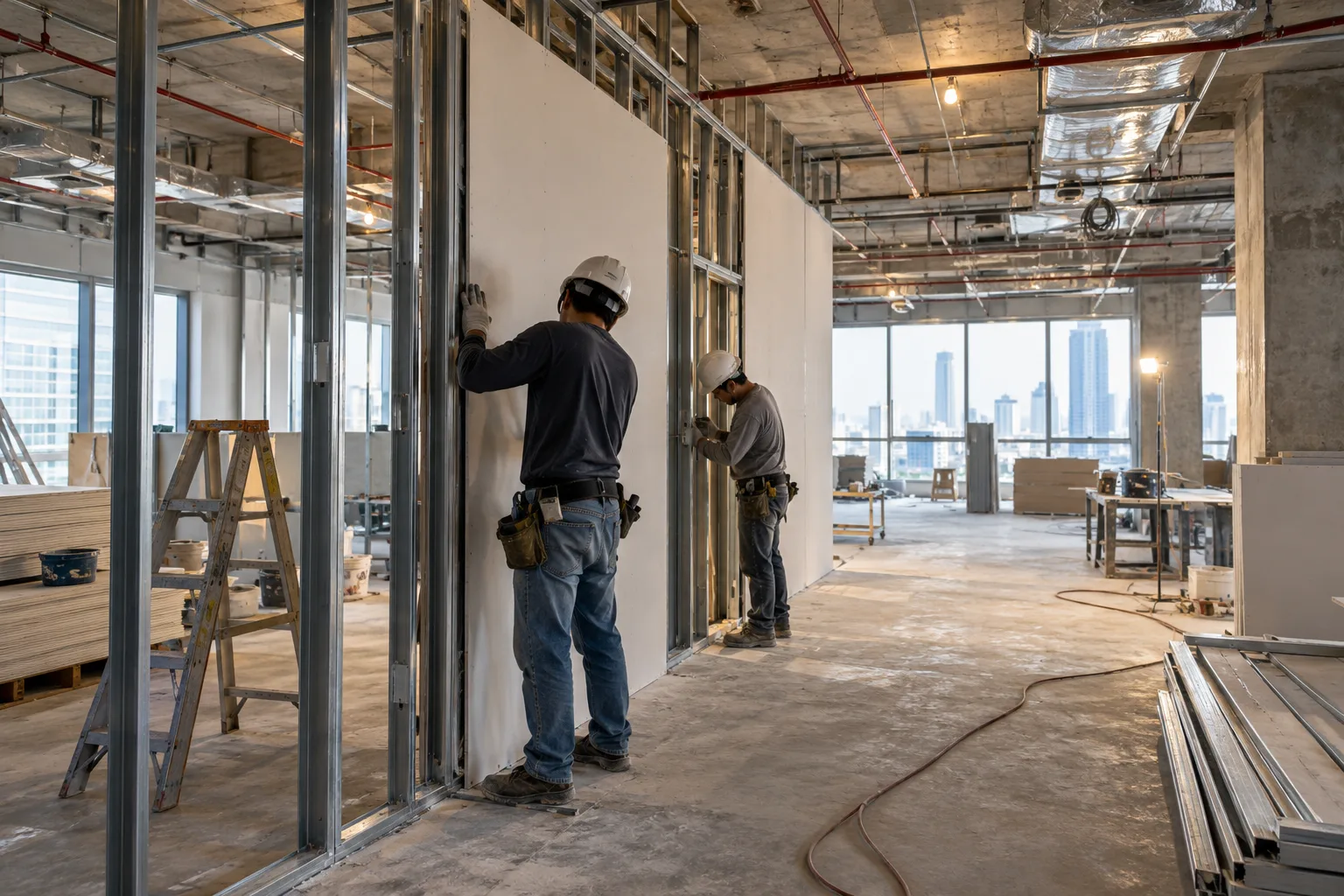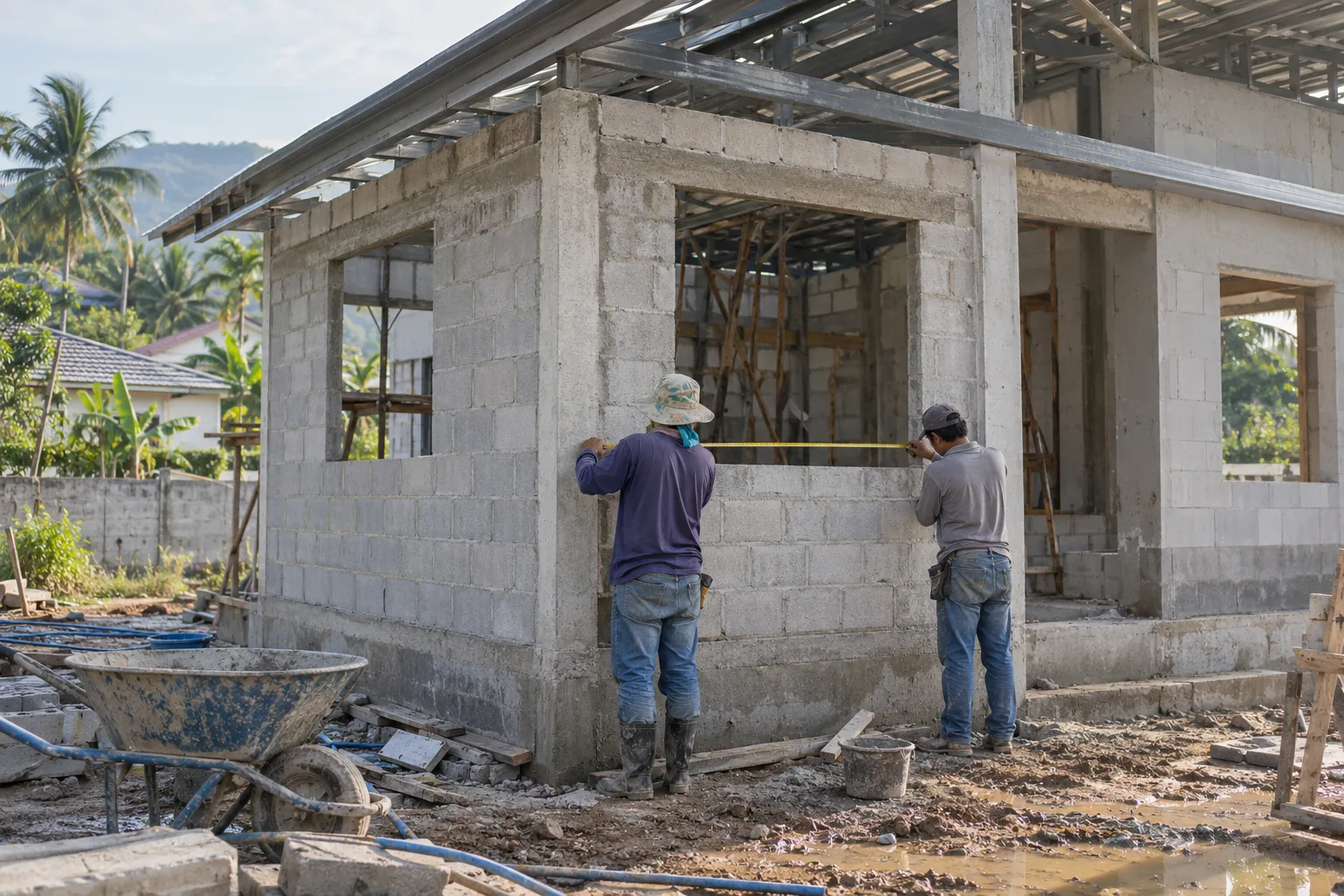
One rule matters more than any other when splitting payments: the total paid must never exceed the value of the work that is finished and inspected. Each payment should be tied to "work that must be complete", something you can see and check, not to a date or a number of months.
5 rules for a safe payment schedule
- Tie payments to work you can inspect, such as "footings and stumps complete", not "month 2".
- Keep the advance small, and deduct it from later payments in proportion.
- Leave enough for the final payment so the contractor has a reason to come back and finish everything.
- Hold back retention from every payment, released after the warranty period following handover.
- Inspect in writing before you pay, with a stage inspection form and photos.
Sample 7-stage payment schedule
This example only illustrates the principle. The real split depends on the design, structure and materials, and should be calculated from your own BOQ.
| Stage | Work that must be complete before payment | Example share |
|---|---|---|
| 1 | Site preparation, setting-out, piles and footings complete | 10% |
| 2 | Columns, ground beams and ground floor complete | 15% |
| 3 | Upper structure and roof frame complete | 20% |
| 4 | Roofing, walls, plaster and pipes in walls complete | 15% |
| 5 | Floors, ceilings, doors, windows and sanitary ware complete | 15% |
| 6 | Painting, electrical and plumbing complete and tested | 15% |
| 7 | Full handover, every item inspected | 10% |
A schedule like this is already at the end of our free contract. Download it and adapt it to your house.
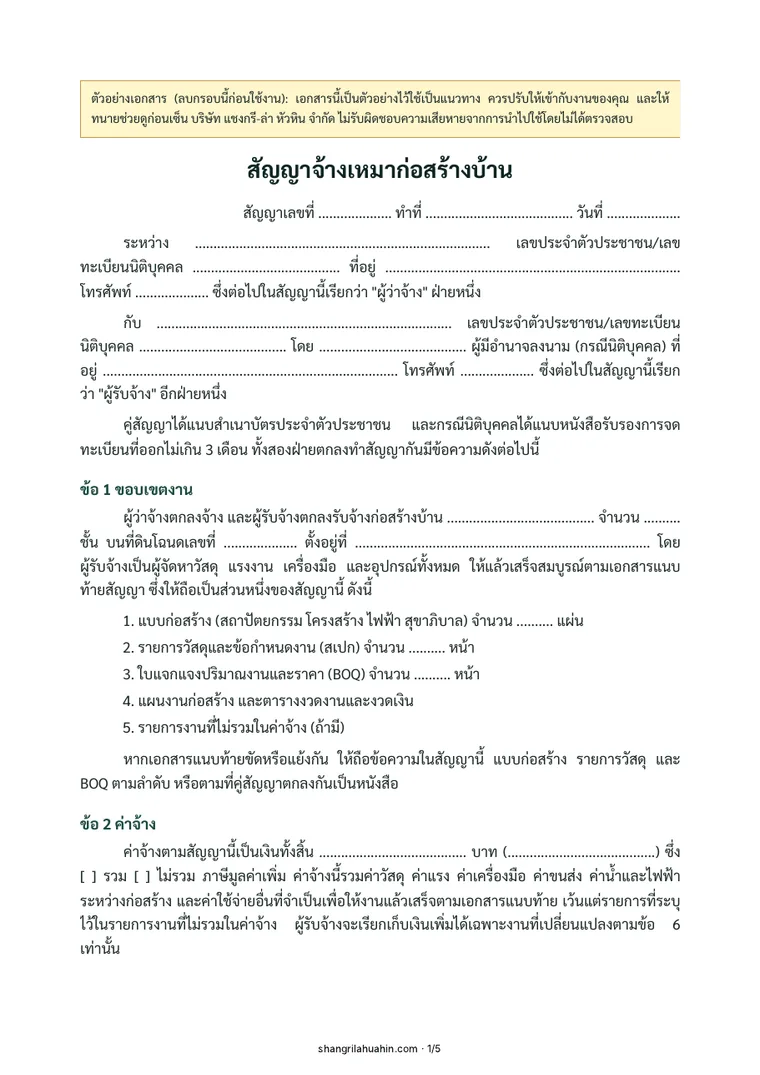
House construction contract
Hiring a contractor to build a whole new house, with the contractor supplying all materials and labour.
Warning signs in a payment schedule
- A large deposit or advance before any work has started.
- Early payments far above the value of the structural work actually done.
- Asking for the next payment before the current stage is inspected, or to "borrow from the next stage".
- Asking you to pay into the account of someone who is not party to the contract.
- A final payment so small that there is no incentive to come back and finish.
Inspect before every payment
Use a stage inspection form to record the work that passed, the items to fix, and the net payment after retention. Have both sides sign it and attach photos. These forms are your best evidence if you ever need to work out how much you overpaid.
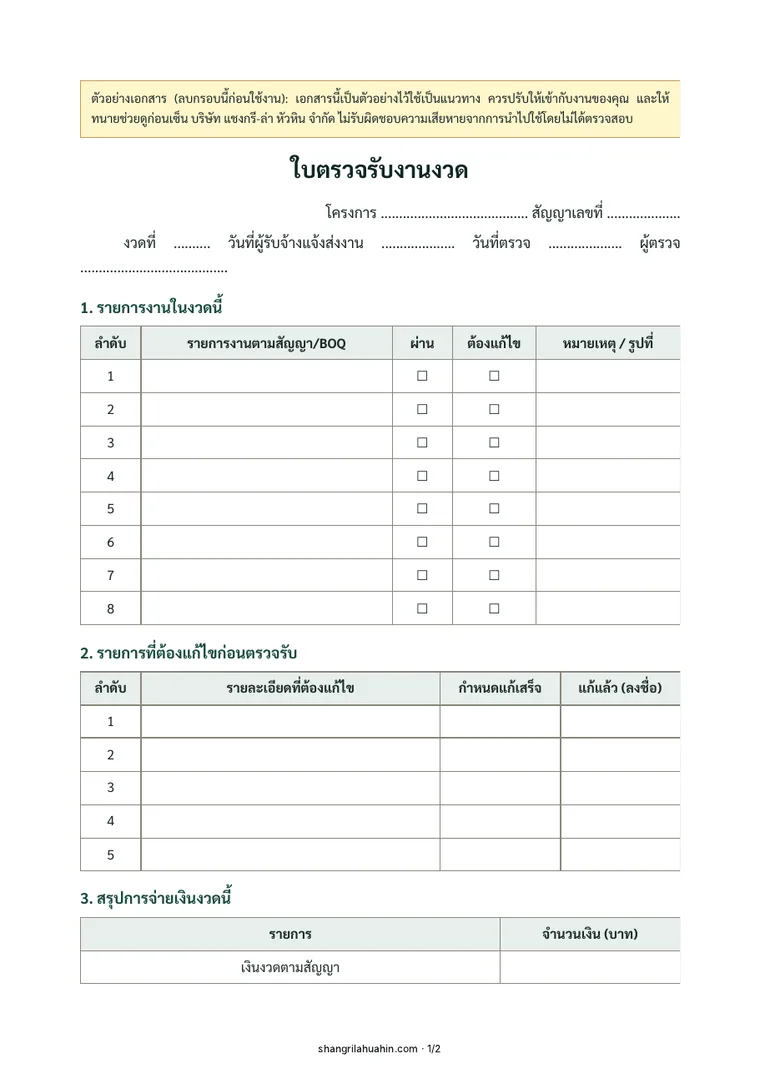
Stage inspection form
Before every payment, so you have proof the work matches the money paid.
Planning to build? See every item before you decide.
Send your location, plans or photos and we will come back with an initial scope of work.

Frequently asked questions
How many payments should building a house be split into?
A typical house is split into 5 to 10 payments following the work stages. The number matters less than the rule that each payment is tied to inspected work and the total paid never exceeds the real value of the work.
How much deposit should I pay a contractor?
As little as is needed to start work, deducted from later payments. If a contractor asks for a large advance with nothing yet to inspect, think carefully.
What is retention?
Part of each payment that the owner holds back and returns to the contractor after the warranty period following handover, so the contractor comes back to fix defects found later.