Eight steps, in order
| Step | What happens | Who should be with you |
|---|---|---|
| 1 | Set up a legal investment structure | Lawyer, accountant |
| 2 | Check the land | Lawyer, surveyor |
| 3 | Check zoning and building rules | Architect |
| 4 | Feasibility and costs | Contractor, accountant |
| 5 | Buy or lease the land, and register it | Lawyer |
| 6 | Design and permits | Architect, engineer |
| 7 | Build | Contractor, your own supervisor |
| 8 | Sell, transfer and after-sales | Lawyer, sales team |
1. Structure before land
Don't put a deposit on land before you know who will hold it: a real joint venture with Thai partners, a long lease, or another route. See Can a foreigner be a property developer in Thailand? You need a lawyer and an accountant here, because foreign business law, land law and tax all meet at this step.
2. Check the land properly
- Title type. A Chanote (Nor Sor 4) is the strongest. Nor Sor 3 Gor comes next. Land under documents such as Sor Por Kor cannot be bought for a project.
- Burdens. Mortgages, servitudes, existing leases. They are recorded on the back of the deed and at the Land Office.
- Access. Does it really touch a public road, or cross someone else's land?
- Boundaries. Have the plot surveyed before you buy.
- The seller. Are they the owner on the deed, with authority to sell?
3. Zoning and building rules
The town plan says what the land may be used for, how high you can build and how much of the plot you can cover. Some coastal and tourist areas add rules on height and setbacks. Ask the local authority before you design, not after.
4. Costs and feasibility
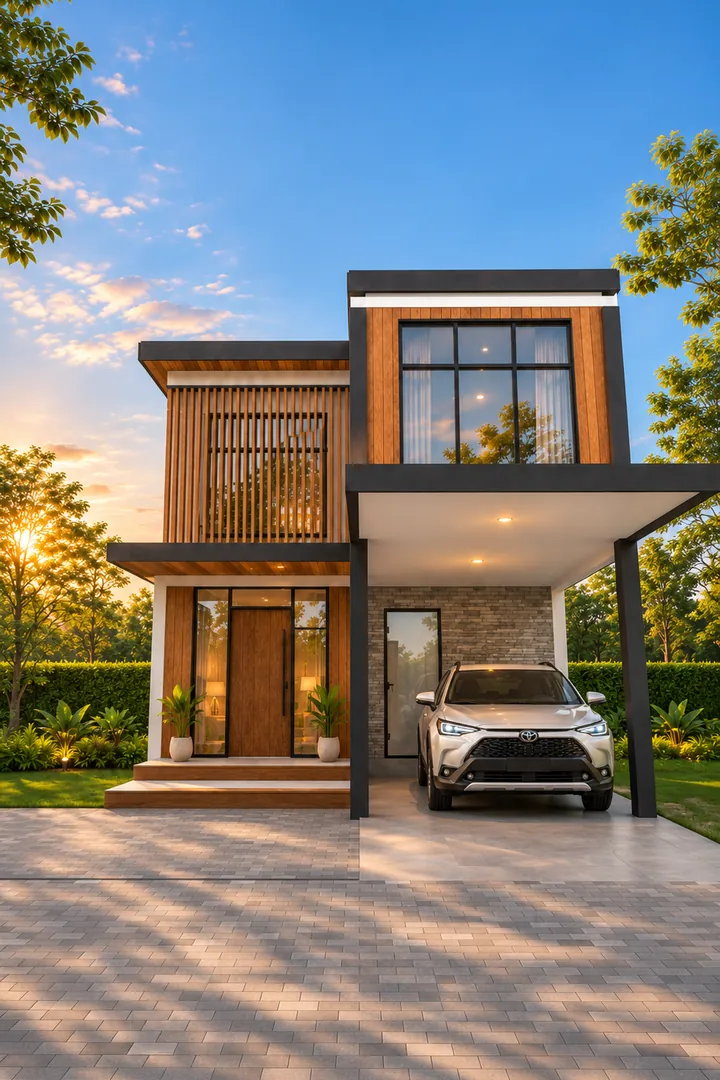
Construction is the one cost you can pin down early, if you have drawings and a BOQ. As an example from our plans, Cube Duo at 149 sq.m. costs 2,646,167 THB per house, overhead and VAT included. For the other cost lines see Costing a project.
5. Buy or lease, then register
A land sale, and any lease over 3 years, must be registered at the Land Office to be fully valid. Bring investment money in through a bank and keep the records; you'll need them to send profits home.
6. Permits
A land allotment licence if you sell 10 or more plots, a building permit for every building, and an EIA if the project is large enough. A condominium must be registered under the Condominium Act. Details in Which permits you need.
7. Build
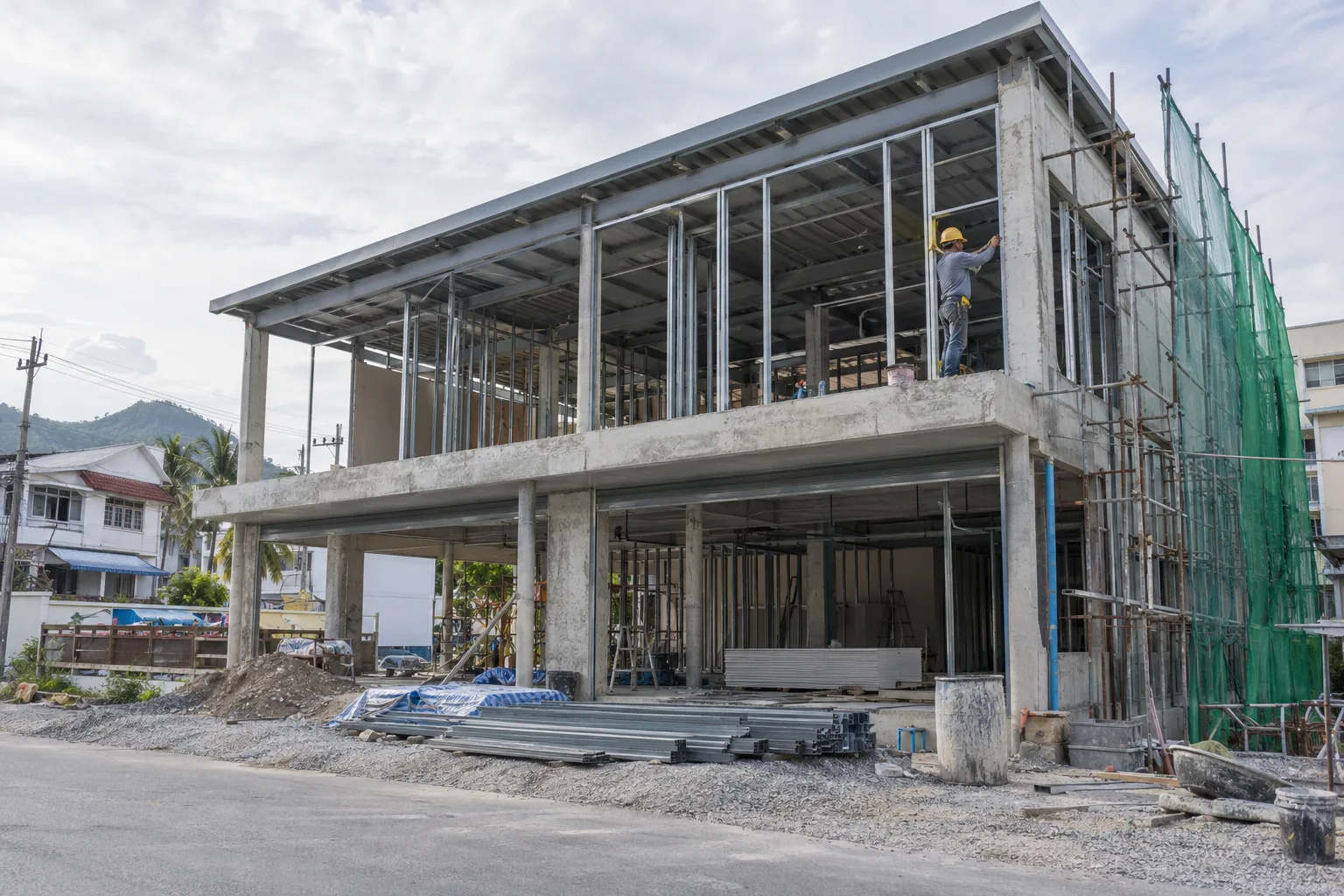
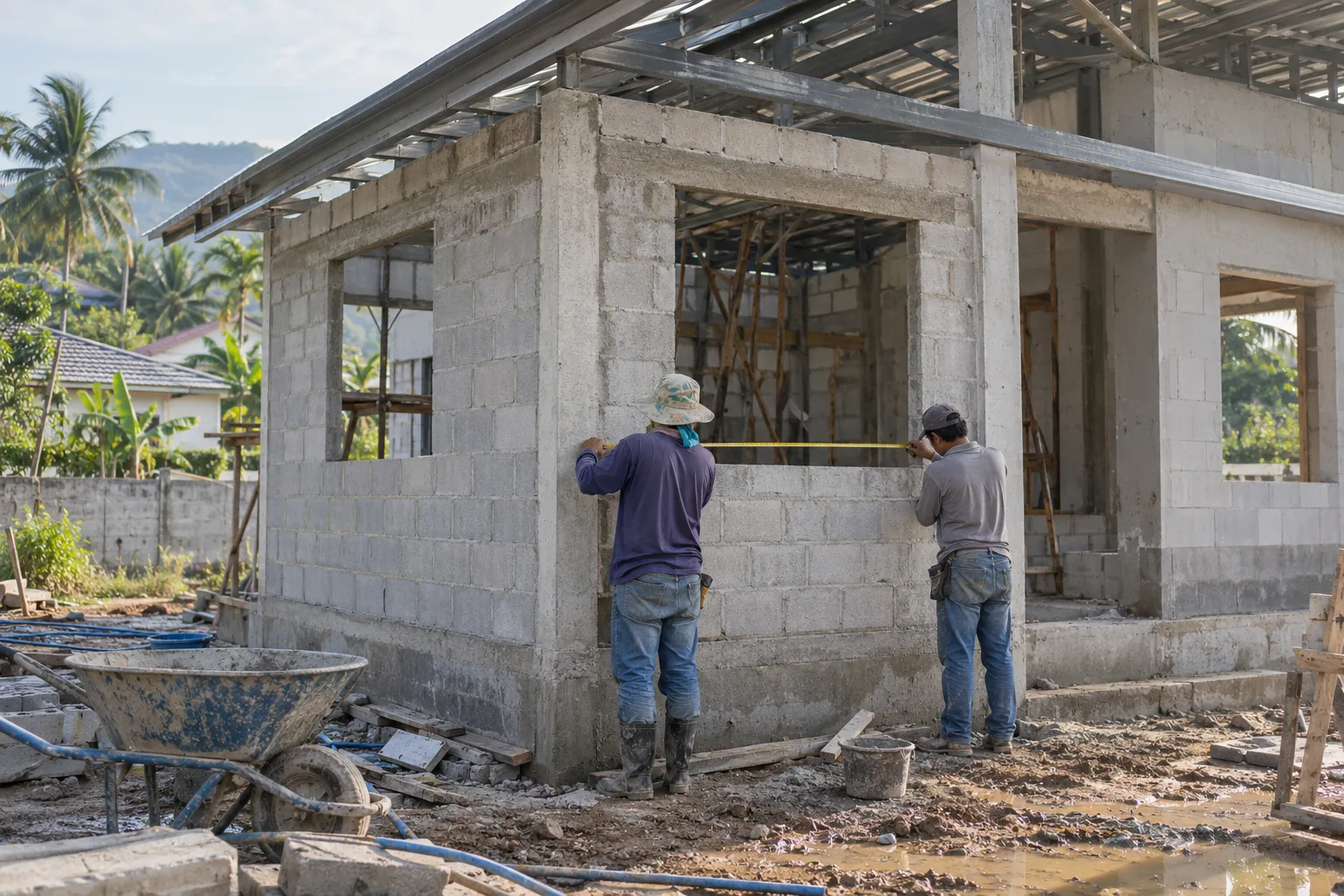
If you are not in Thailand full time, have your own person inspect before each payment, and ask the contractor for regular photo reports. A foreigner who works in Thailand needs the right visa and a work permit, even as a director of their own company.
8. Sell and transfer
Foreign buyers can own condominium units within the 49% quota of a building's unit floor area, and must bring in foreign currency to pay. A house with land cannot be sold freehold to a foreigner; a lease is the way. On transfer there are transfer fees, specific business tax and income tax, which your accountant should have worked out back at step 4.
The question we hear most: how long does it take?
We can only answer for construction, which depends on the size and number of houses. Permits depend on the province and on how complete your documents are. Don't trust anyone who promises a firm date before they've seen the land.
This article is general information, checked against public sources in November 2026. Laws change and every case is different. Before you sign or pay anything large, have a Thai lawyer review your own documents.
Planning to build? See every item before you decide.
Send your location, plans or photos and we will come back with an initial scope of work.

Frequently asked questions
Where should a foreign investor start?
With a legal investment structure, set up with a lawyer and an accountant, before paying any deposit on land.
What does land due diligence cover?
The title type, mortgages and servitudes, road access, surveyed boundaries, zoning, and the seller's identity and authority.
Can I sell project houses to foreigners?
Not the land freehold. A long lease is the usual route. Condominium units can be sold within the 49% foreign quota.